
76% of pages cited by ChatGPT have been updated within the last 30 days (Ahrefs, 2025). Here is the 12-action checklist to revive an old article in LLMs in 2026.
Key takeaways: An effective GEO refresh in 2026 combines 12 actions across 4 phases: diagnosis, editorial refresh, technical refresh, distribution and measurement. Results are measured at 30 and 60 days on your AI Share of Voice.
Why a GEO refresh in 2026 follows different rules than a classic SEO refresh
A classic SEO refresh targets Google. It updates title tags, adds internal links, optimizes Core Web Vitals, checks the linking structure. A GEO refresh targets ChatGPT, Claude, Perplexity and Gemini. It restructures content into autonomous chunks, densifies named entities, places hero stats in the first third of the text, and updates dated sources.
The two don’t contradict each other. But they don’t merge either. A purely SEO refresh checklist in 2026 produces an article well-rated by Google that may stay invisible to LLMs. This is what I regularly observe on client sites: stable Google traffic and zero AI citations, because the content structure isn’t adapted to generative engine extraction mechanics.
The 2025 Ahrefs analysis on 17 million AI citations quantifies the stakes: 76.4% of pages cited by ChatGPT were updated in the last 30 days, and 44.2% of LLM citations come from the first third of the text. These two figures dictate the prioritization of an effective GEO refresh.
The GEO refresh doesn’t replace your existing SEO strategy. It adds to it. The 12-action checklist below integrates both dimensions, with explicit priority given to GEO mechanics over classic elements when arbitration is needed.
Phase 1: the 3-action diagnosis before touching the content
Skipping the diagnosis phase is the most frequent mistake. Brands that refresh by feel, without baseline, can’t measure ROI. They refresh the wrong pages, miss the real factual debts, and skip the high-potential opportunities. Phase 1 takes 30 to 60 minutes per article and conditions the profitability of all the work that follows.
Action 1: Identify refresh-priority pages
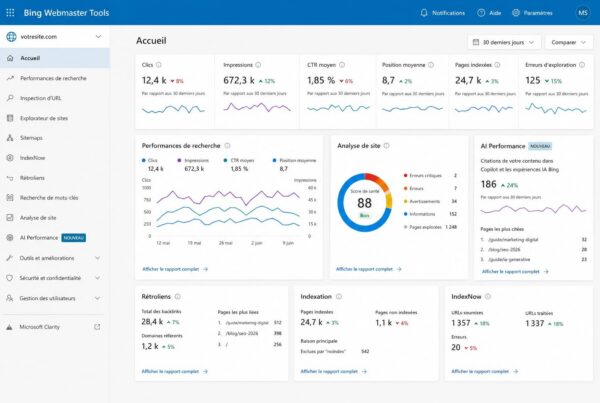
The method I apply combines 3 sources: Google Search Console, AI Share of Voice tracking, and server logs. In GSC, I target pages in positions 5 to 20 with a CTR below 3% on strategic queries. These are the pages capturing traffic but underperforming, therefore the most profitable to refresh.
On Cockpyt AI, I cross-check with current AI Share of Voice: pages present in LLM responses but with low citation frequency are priority. A page ranking on Google but ignored by ChatGPT signals a chunking or entity authority problem, two corrections that can be addressed in a refresh.
Action 2: Measure the baseline before action
Without a baseline, you have no way to prove ROI on a refresh. I systematically capture 3 KPIs before any modification:
- Existing LLM citations across 30 to 100 strategic prompts related to the page (ChatGPT, Claude, Perplexity, Gemini)
- Third-party sources that already cite the page (backlinks, press mentions, Reddit threads)
- Average GSC position on the page’s 5 main queries
These 3 measurements form your reference. Without them, the refresh becomes a belief exercise, not a measurable investment.
Action 3: Audit the factual debt
Factual debt is the set of outdated information an old article contains. In 2026, on a 2023 article, the typical list includes: dated stats no longer holding, examples of brands that went bankrupt or changed positioning, AI models mentioned that were replaced (GPT-3, Claude 1, Bard), source URLs returning 404, screenshots of interfaces that have changed.
I inventory line by line and note what must be deleted, updated, or replaced. This list becomes the brief for phase 2.
Phase 2: the 5 GEO-specific editorial refresh actions
Phase 2 is the heart of the GEO refresh. The 5 actions below are the ones that move an article from “readable” to “extractable by LLMs”. Each produces a measurable effect on AI Share of Voice, provided it’s applied fully.
Action 4: Rewrite the intro in 200 characters with fresh hero stat
The intro is the chunk most extracted by LLMs. According to Ahrefs, 44.2% of LLM citations come from the first third of an article. A poorly structured intro wastes this opportunity. I systematically rewrite it with 3 constraints: under 200 characters, contains a dated and sourced hero stat, directly answers the implicit question of the H1.
Example transformation. Intro 2023: “Content refresh has become an essential strategy for marketers wanting to maintain visibility.” Intro 2026: “76% of pages cited by ChatGPT were updated within the last 30 days (Ahrefs, 2025). Here’s how to refresh an article for LLMs.”
Action 5: Rechunk the paragraphs
Chunking is the mechanic that determines whether your paragraphs are extracted or ignored by LLMs. Three criteria to respect: one chunk = one idea only, size 150 to 300 words, presence of at least 2 named entities (brands, tools, people, dates, figures).
On an old article, I detect 3 typical mistakes: paragraphs that jump topic without transition, ambiguous references like “this strategy”, “this process” without clear antecedent, and short disconnected list-paragraphs that prevent semantic autonomy. Rechunking corrects these 3 mistakes by rewriting each paragraph to be readable in isolation.
Action 6: Update sources and dated stats
LLMs positively weight content with recent dated sources. A 2022 stat in a 2026 article sends a weak freshness signal. I systematically replace stats prior to 2024 with 2025-2026 data when available. When unavailable, I keep the old one but specify the date in text (“according to a 2022 X study”).
Source URLs are checked one by one. Broken links are replaced with equivalent sources or removed. A 404 source in a recently refreshed article degrades your quality score in the eyes of Google and LLMs.
Action 7: Add or enrich the FAQ
A well-written FAQ is a particularly performant LLM citation asset, because it exactly matches the Q&A format LLMs prioritize for extraction. The Semrush study on Reddit sources published in November 2025 confirms that more than 50% of Reddit citations in AI responses come from Q&A-formatted threads. The same logic applies to owned content.
I aim for 5 to 7 PAA questions in the FAQ, each with a 60 to 120-word answer, dense in named entities. If the FAQ existed but with 3 questions, I add some. If it didn’t exist, I create one. The FAQPage JSON-LD must follow.
Action 8: Verify internal links to more recent cluster articles
An old article was published when your cluster was smaller. Articles published since aren’t linked. The refresh is the opportunity to update internal linking by adding 2 to 4 links to relevant recent content, with explicit anchors.
This action has a double benefit: it reinjects SEO juice toward new articles, and it sends a freshness signal to Google on the old article reconnecting to the current cluster.
Phase 3: the 2 technical actions to help AI crawlers
Editorial actions aren’t enough if AI crawlers can’t access your content correctly. Phase 3 fixes the technical blockers that make your efforts invisible. It takes 15 to 30 minutes per article if the site’s technical base is healthy.
Action 9: Update the JSON-LD
JSON-LD is the identity card you give to engines and LLMs. On a refreshed article, 3 fields must obligatorily be updated: dateModified to today’s date (the original datePublished is kept), new entities mentioned in the “mentions” field, the FAQPage if you modified questions/answers.
A frequent mistake: forgetting the dateModified. Without this update, neither Google nor LLMs perceive your content as refreshed, and you lose the expected freshness effect. Verify the rendering via Google’s Rich Results Test before pushing to production.
Action 10: Verify accessibility to AI crawlers
The Salt Agency study published in September 2025 on 2,138 sites shows that Claude and Perplexity don’t render JavaScript, and that ChatGPT shows uncertain behavior depending on versions. If your article is rendered in client-side JavaScript (React, Vue, Next.js poorly configured), you’re invisible to 2 major LLMs out of 4.
The simple test: open your article in private browsing with JavaScript disabled, or use the curl -L command on the URL. If textual content appears, you’re good. Otherwise, your site needs SSR (Server-Side Rendering) or static prerendering to be read by Claude and Perplexity. It’s a broader dev intervention than the refresh, but worth flagging in the diagnosis.
Phase 4: distribution and measurement to validate the refresh
Phase 4 is the one most brands skip. Refresh without announcement or measurement reduces the effect by 50 to 70% in the cases I observe at Cockpyt AI. The 2 actions below take 15 minutes per article and make the difference between an anonymous refresh and an impactful refresh.
Action 11: Resubmit the URL via GSC and announce the refresh on LinkedIn
Resubmitting the URL in Google Search Console (URL Inspection tool, then “Request indexing”) accelerates refresh consideration. Without this action, Google may take 2 to 6 weeks to recrawl the page based on your crawl budget.
On the LLM side, the effect is indirect but real. A LinkedIn or X post announcing the refresh with a direct article link generates traffic and shares, which accelerates consideration by engines with active web search (Perplexity, SearchGPT). For cutoff models (Claude, Gemini without web search), only the freshness observed by web-connected retrievers matters. So the more content circulates, the more connected engines capture it.
Action 12: Measure at 30 and 60 days via Cockpyt AI
Post-refresh measurement is the only way to attribute ROI. I capture the same 3 KPIs as in action 2 (LLM citations, third-party sources, GSC position) at 30 days and 60 days after the refresh. The delta gives the real impact.
An effective GEO refresh typically produces between +15% and +40% AI Share of Voice on prompts related to the refreshed page, within a 60-day window. If the result is null at 60 days, it means the refresh missed a step (often action 5 on chunking or action 7 on FAQ).
The 12-action recap table
Here is the synthesis table to use as operational reference. Durations are averages on a 1,500 to 2,500-word article.
| Phase | Action | Duration | GEO impact |
|---|---|---|---|
| 1. Diagnosis | 1. Identify refresh-priority pages | 15 min | Indirect (prioritization) |
| 1. Diagnosis | 2. Measure baseline before action | 15 min | Indirect (ROI measurement) |
| 1. Diagnosis | 3. Audit factual debt | 30 min | High |
| 2. Editorial | 4. Rewrite intro with fresh hero stat | 20 min | Very high |
| 2. Editorial | 5. Rechunk paragraphs | 60-90 min | Very high |
| 2. Editorial | 6. Update sources and dated stats | 30 min | High |
| 2. Editorial | 7. Add or enrich FAQ | 30-45 min | Very high |
| 2. Editorial | 8. Verify internal links | 15 min | Medium |
| 3. Technical | 9. Update JSON-LD | 15 min | High |
| 3. Technical | 10. Verify AI crawler accessibility | 15 min | Very high if problem detected |
| 4. Distribution | 11. Resubmit via GSC + announce refresh | 10 min | Medium to high |
| 4. Distribution | 12. Measure at 30 and 60 days | 15 min | Indirect (validation) |
Estimated total for a complete article: 4 to 5 hours of work spread over 60 days (most concentrated at D0, the rest on measurement actions). At this pace, refreshing 2 to 4 articles per month remains realistic for a consultant or internal team, which is enough to produce a measurable effect on overall AI Share of Voice.
FAQ on GEO refresh in 2026
Should I change the publication date or only the modification date during a refresh?
Only the modification date. The original datePublished must be kept to preserve SEO history and consistency of any backlinks. The updated dateModified signals to engines and LLMs that a refresh occurred, without misleading the ecosystem on the content’s real age.
How long after the refresh do LLMs re-cite the article?
Between 30 and 60 days for most cases. Perplexity and SearchGPT, with active web search, integrate new versions faster (sometimes 7 to 15 days). Claude and Gemini without web search depend on an index refresh or capture by their web-connected retrievers. For this reason, measurement is done at 30 days then confirmed at 60 days.
How often should I refresh the same article?
Practical rule: refresh a strategic page every 6 to 12 months, or earlier if factual data has changed. Critical business pages (product pages, pricing pages, category pages) require more frequent refresh (3 to 6 months). Refreshing too often (every month on the same page) dilutes the signal and brings nothing.
Does refresh replace creating new articles?
No. The two are complementary. Refresh maintains existing assets’ performance, creation fills thematic gaps. A balanced 2026 GEO strategy allocates 30 to 50% of production time to refreshing existing articles and 50 to 70% to creating new content.
How do I know if a refresh actually improved my AI visibility?
The baseline / 30-day / 60-day method on 30 to 100 strategic prompts is the only one that produces a reliable signal. Without a dedicated tool like Cockpyt AI, measurement is possible but limited to a dozen manual prompts, which doesn’t guarantee statistical reliability. With a tool, attribution becomes precise and historicized.
Should I refresh all old articles or just some?
Just some. Not all articles have the same potential. Focus on strategic business pages, pages already capturing GSC traffic, and pages ranking on LLM-targeted queries. A Cockpyt AI audit cross-referenced with Google Search Console identifies the 10 to 30 priority pages on an average site.
What’s the most frequent refresh mistake?
Incomplete rechunking. Brands refresh the intro and FAQ but leave the middle paragraphs as-is. But LLMs extract from the entire page, not just the beginning. An article with a clean intro and poorly chunked middle remains partially invisible. Rechunking must apply to the entire page, no exception.
Sources
- Ahrefs, Fresh Content and AI Search (analysis on 17 million AI citations), 2025, https://ahrefs.com/blog/fresh-content/
- Semrush, We Analyzed 248K Reddit Posts: What Drives Visibility in AI Search, November 2025, https://www.semrush.com/blog/reddit-ai-search-visibility-study/
- Salt Agency, Technical SEO for AI Search, September 2025, https://salt.agency/blog/technical-seo-for-ai-search/
- Stacker + Scrunch, Coverage Breadth Study, March 2026, https://stacker.com/blog/latest-research-on-expanding-brand-visibility-across-llms